24.09.2024
Acute Myocardial Infarction: symptoms, warning signs and first aid
Acute Myocardial Infarction (AMI) is one of the most common causes of death worldwide. Early recognition of the symptoms and immediate reaction are vital for the survival and recovery of the patient.
What is Acute Myocardial Infarction?
A heart attack occurs when the blood flow is completely interrupted to a part of the heart muscle. It is usually due to the blockage of a coronary artery (the vessels that supply the heart) by a blood clot.
The clot forms on an atheromatous plaque (a build-up of cholesterol, calcium and other substances) that has ruptured. The interruption of blood supply leads to a lack of oxygen, resulting in the necrosis of the corresponding part of the heart muscle.
Signs and symptoms
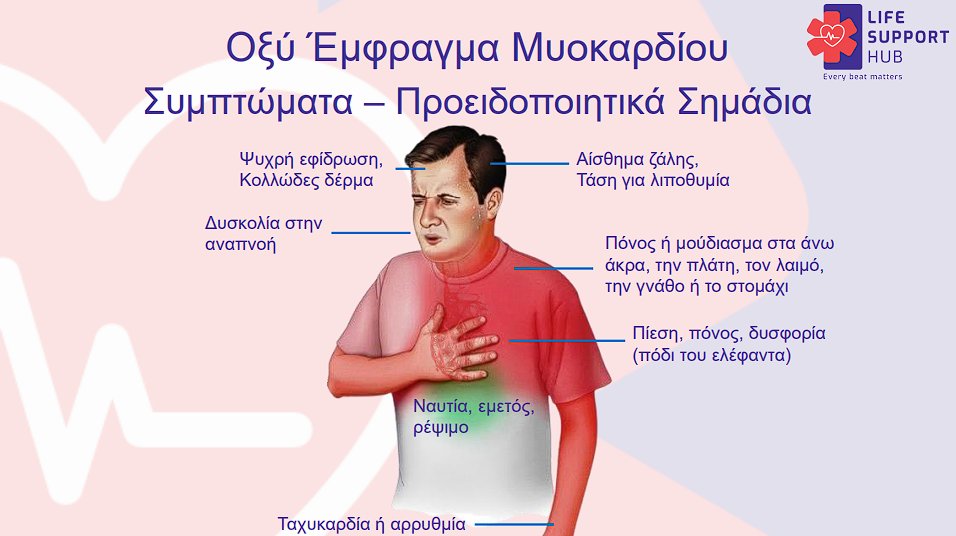
The classic symptom is intense chest pain (behind the sternum), often described as:
- Tightness, pressure or heaviness.
- Burning or a feeling of numbness.
- Pain that radiates to the left arm (or both), to the neck, the lower jaw, the back or the stomach (epigastrium).
Other possible symptoms:
- Shortness of breath (difficulty breathing).
- Nausea and/or vomiting.
- Cold sweat (pale and sweaty skin).
- Weakness, dizziness or fainting.
- A feeling of intense anxiety.
Watch out for atypical symptoms:
In women, one of the most common atypical symptoms is unusual, intense or prolonged fatigue, which may appear even days or weeks before the heart attack.
In patients with diabetes, symptoms may be atypical (mild discomfort, fatigue, indigestion, pain in the neck or back without intense chest pain). Around 20% of heart attacks are "silent".
Family history and risk factors
A family history of coronary disease is an important risk factor, especially when it has occurred in a first-degree relative (parents, siblings) at a relatively young age (e.g. under 55 for men and under 65 for women).
The main modifiable risk factors:
- Smoking (the strongest factor).
- Arterial hypertension.
- Dyslipidaemia (high cholesterol, especially LDL).
- Diabetes mellitus.
- Obesity and a sedentary lifestyle.
- Psychological stress.
First aid and immediate treatment
If a heart attack is suspected, time is critical.
- Call 112 immediately. Do not try to travel to hospital on your own.
- Stay calm and sit or lie down in a comfortable position. Avoid any physical exertion.
- If you have aspirin (and there is no known allergy), chew and swallow one tablet (usually 300mg). It helps prevent further clotting.
- If you have been prescribed nitroglycerin (for angina), use it according to your doctor's instructions, while waiting for the ambulance.
Attention! If the person loses consciousness and is not breathing or has no pulse, start Cardiopulmonary Resuscitation (CPR) immediately, if you know the procedure, and use an Automated External Defibrillator (AED) if one is available.
Definitive treatment and therapy
In hospital, treatment aims at the immediate restoration of blood flow to the affected part of the myocardium (reperfusion), limiting the necrosis.
- Mechanical reperfusion (primary angioplasty / stent): the preferred method. Through a catheter, the cardiologist opens the blocked vessel and places a stent to keep it open.
- Pharmacological thrombolysis: the administration of drugs that dissolve the clot, when angioplasty is not immediately available (within a specific time window).
- Medication:
- Antiplatelet drugs (aspirin, clopidogrel etc.) to prevent new clots.
- Cardioprotective drugs (beta-blockers, ACE inhibitors/sartans).
- Statins to reduce cholesterol.
Life after a heart attack: prevention
The most important measure after a heart attack is secondary prevention, to avoid a second episode.
- Stopping smoking: immediately and completely, of every kind (including the e-cigarette).
- A healthy diet: a cardioprotective diet (e.g. Mediterranean), rich in fruit, vegetables, whole-grain products and "good" fats (olive oil, fish), and low in saturated fats and salt.
- Regular exercise: gradual rehabilitation with systematic, moderate-intensity aerobic exercise, always following the cardiologist's instructions (Cardiac Rehabilitation Programme).
- Control of risk factors: strict regulation of blood pressure, lipids and blood sugar.
- A healthy weight and stress management (relaxation techniques, sufficient sleep).
- Continuous monitoring: regular check-ups by the cardiologist and faithful adherence to the medication.
Acute Myocardial Infarction is a serious, but treatable, emergency. Knowledge of the symptoms, immediate action and the adoption of a healthy lifestyle are the best defence.